ESOPs: The Emerging Ownership Model for the Construction Industry
/in Articles, Insights WideThis article was updated in June 2026.
Employee Stock Ownership Plans (ESOPs) have become an increasingly important ownership transition strategy in the construction industry. While a third-party sale remains an attractive option for many contractors, not every construction business fits neatly into a traditional M&A process. Bonding requirements, project-based cash flows, management continuity concerns, and buyer financing limitations can all narrow the universe of potential acquirers.
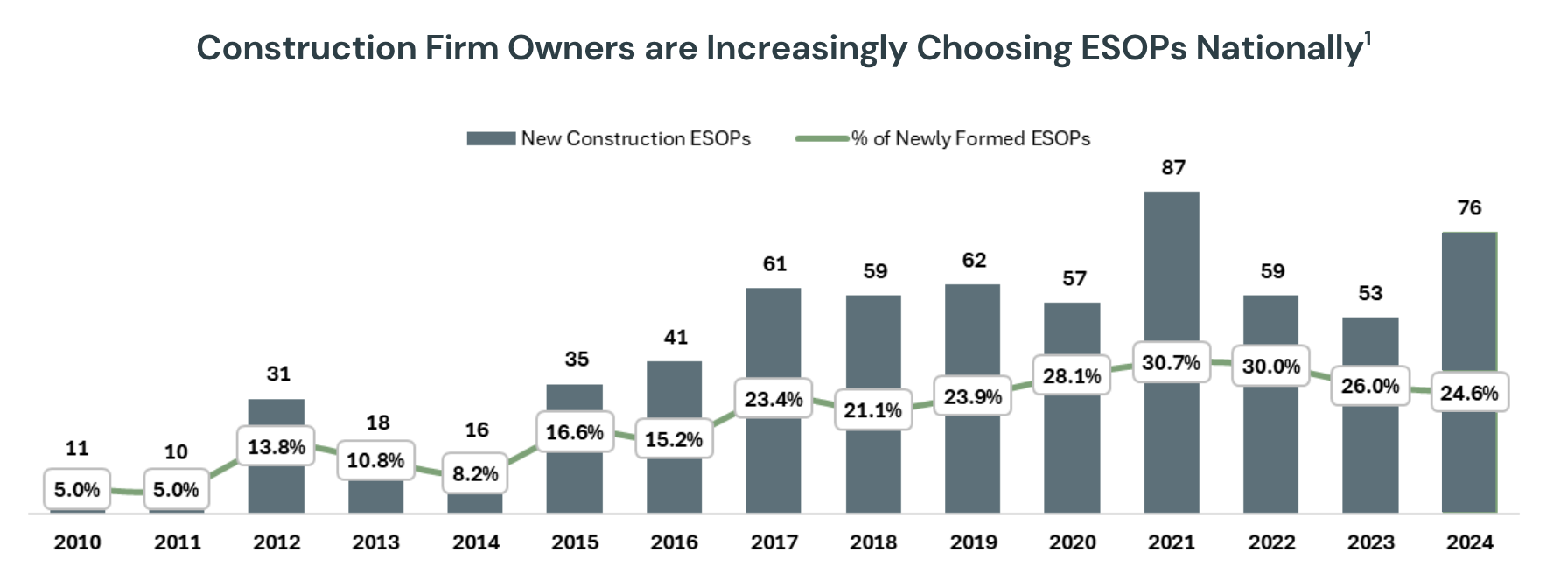
As a result, construction owners are increasingly evaluating ESOPs as an alternative path to liquidity and succession. Construction now represents approximately 25–30% of new ESOP formations annually, and the number of ESOP-owned construction firms has grown from roughly 700 to more than 1,100 over the past decade.
This trend is particularly evident among heavy civil contractors, general contractors, industrial contractors, and other bond-heavy businesses. These companies often have strong market positions and long histories of performance, yet their bonding requirements, project risk, and working-capital needs can create challenges in a traditional sale process. For many owners, an ESOP can provide a way to transition ownership while preserving culture, maintaining surety relationships, and supporting long-term continuity.
Construction M&A Realities
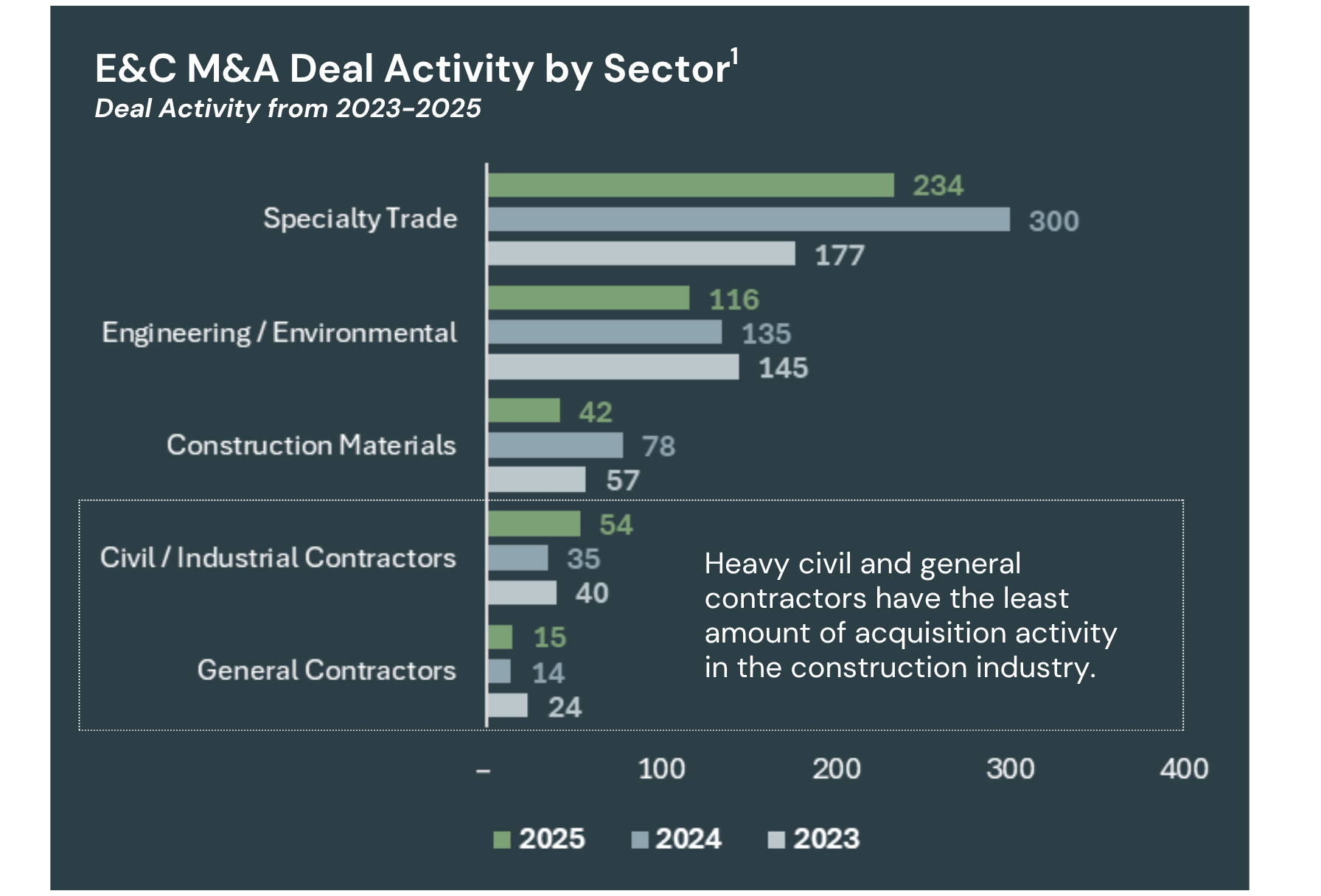
The construction M&A market is not one-size-fits-all. Certain sectors, including mechanical, electrical, plumbing, HVAC, roofing, fire protection, and other specialty services, have attracted significant interest from private equity and strategic buyers. These businesses can benefit from recurring maintenance revenue, service relationships, higher margins, and more fragmented competitive landscapes.
At the same time, other contractor categories can face a more limited buyer universe. Heavy civil contractors, general contractors, industrial contractors, and other project-based businesses are often more difficult for financial buyers to acquire because they can require meaningful bonding capacity, have lower margins, and rely heavily on backlog execution, field leadership, and customer relationships.
Adding to the complexity, surety bond obligations make M&A transactions in this industry more difficult, further reducing private equity’s interest in the sector.
Surety underwriters assess a company’s financial strength by evaluating its capital structure, liquidity, and the stability of its management team. If an acquisition introduces significant debt or results in the loss of key leadership, the surety may decline to issue bonds—raising concerns about the company’s financial viability and continuity, both of which are essential for maintaining bonding capacity.
1) CapIQ; BaseRock Partners Analysis
Public Market Insights: Valuations Substantiate Expectations
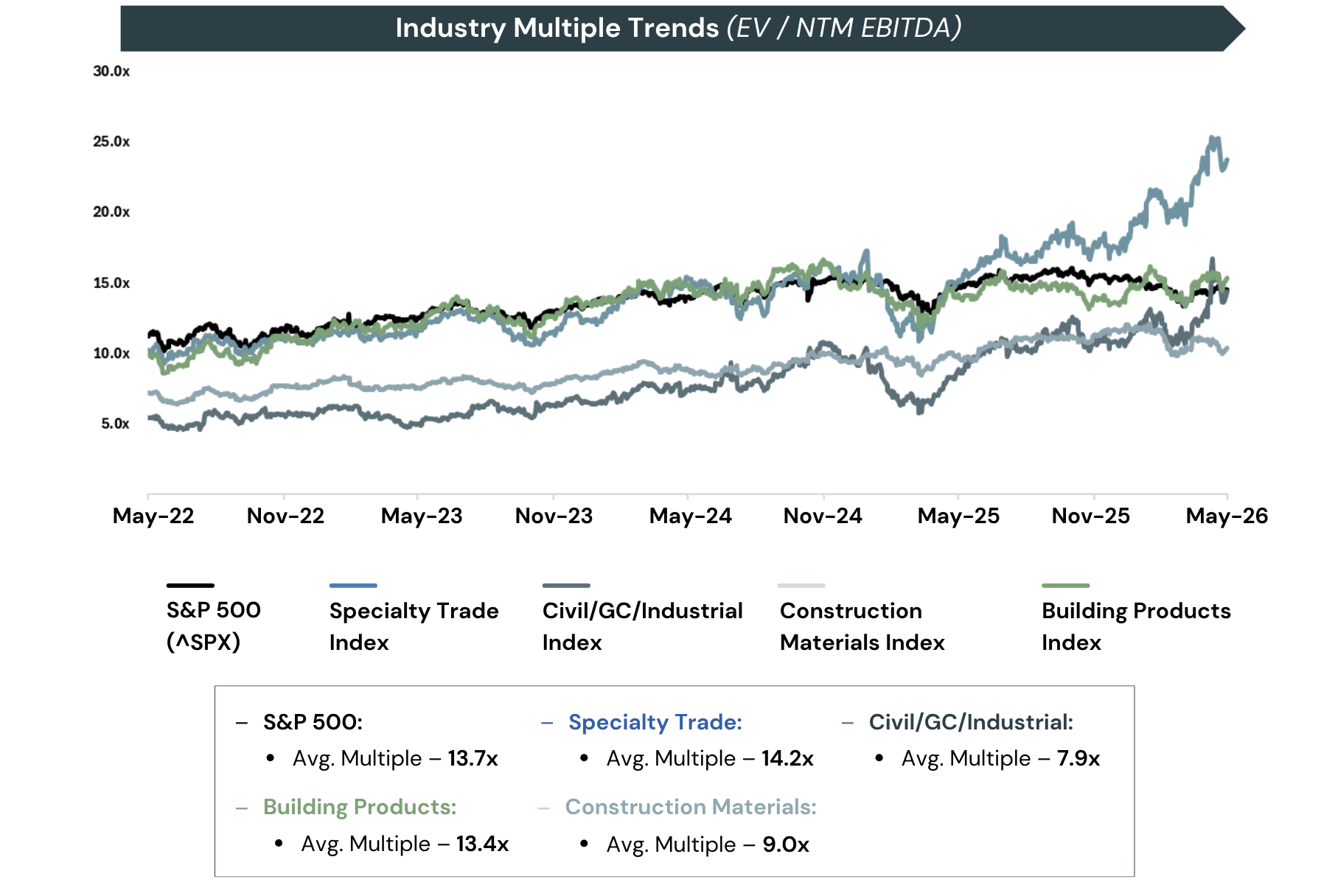
The differences across contractor business models are also reflected in public market valuations. As shown in the chart below, publicly traded heavy civil and general contractor comparables typically trade at a discount to specialty contractors and other construction-adjacent sectors.
This valuation gap is driven by factors such as project-based cash flows, surety requirements, and lower margins – all of which increase perceived risk and contribute to compressed EBITDA multiples.
ESOPs by the Numbers
For many contractors, a third-party sale remains a viable and attractive option. However, an ESOP can be particularly advantageous when owners want to transition ownership without disrupting the company’s culture, risking surety relationships, or forcing the business into a highly leveraged acquisition structure.
These conditions have led construction owners to identify Employee Stock Ownership Plans (ESOPs) as a compelling solution with significant advantages for both owners and employees.
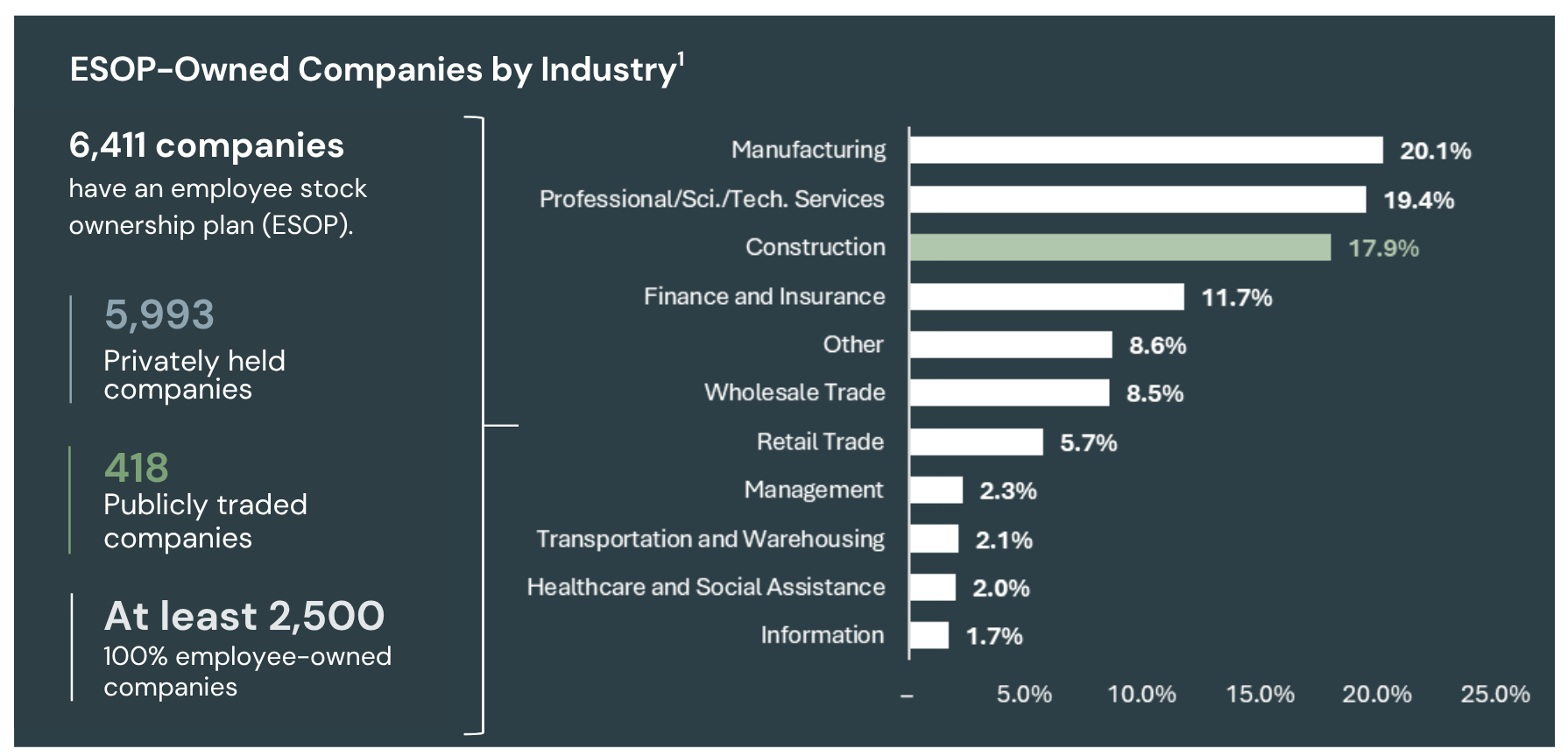
- • Construction companies account for 17.9% of existing ESOPs in the U.S.
- • Representing ~25% of new formations annually, the construction industry is one of the fastest-growing cohorts of ESOPs
- • Across all industries, ~15 million employees participate in ESOPs, with ~260 plans established annually on average
1) NCEO; BaseRock Analysis
Formation Trends: ESOP Adoption by Industry Subsector
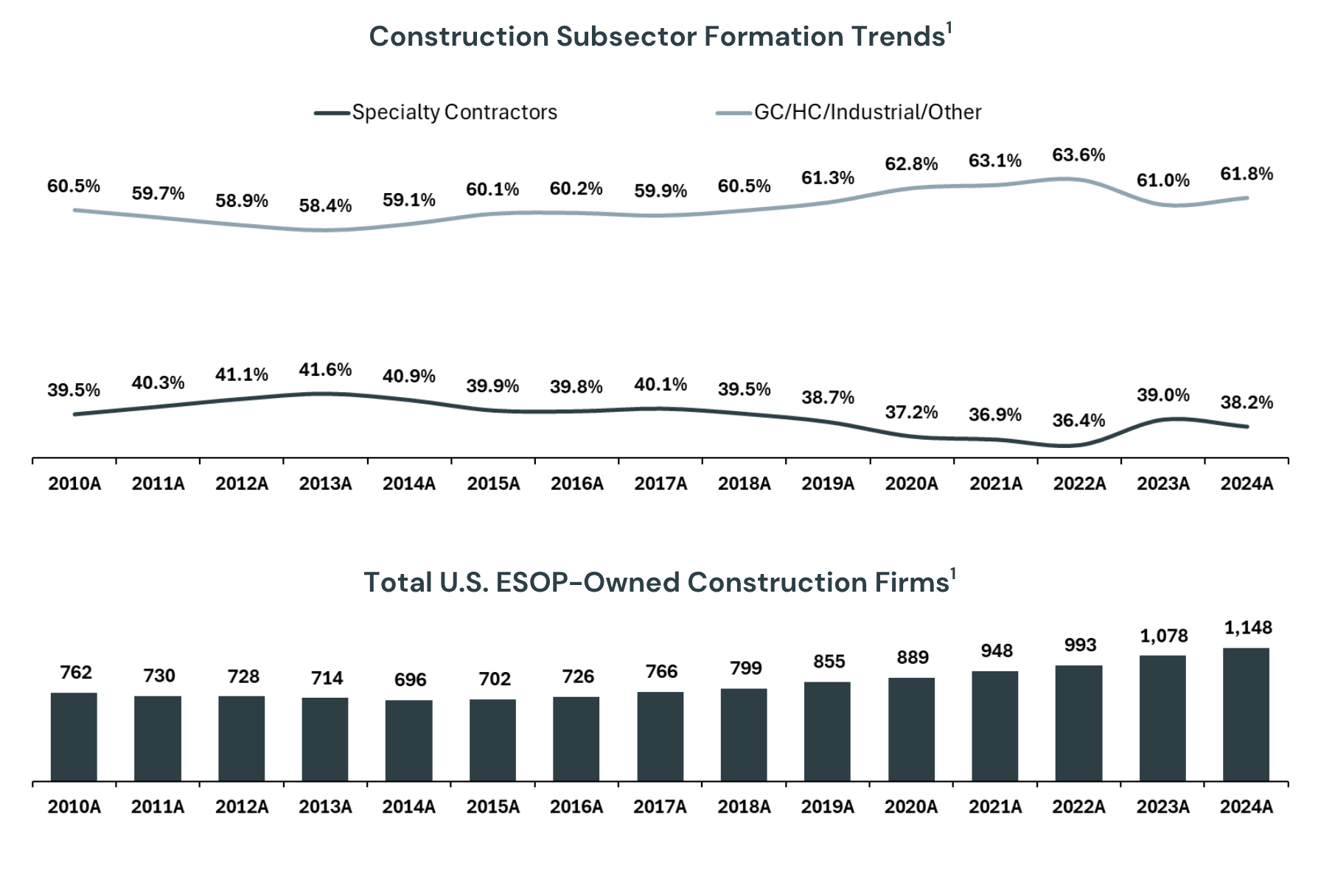
When we analyzed the data, it confirmed what we have seen anecdotally: ESOP adoption has been especially strong among general contractors, industrial contractors, and heavy civil firms. These companies often have strong cultures, long-tenured employees, meaningful bonding requirements, and shareholder bases that care deeply about legacy and continuity.
Private equity interest varies significantly by contractor type. Specialty contractors, including mechanical, electrical, plumbing, HVAC, roofing, and other trade-focused businesses, may attract more traditional M&A interest because they often have recurring revenue, higher margins, and less exposure to large bonded projects. These characteristics can make them more attractive to private equity and strategic buyers.
By contrast, heavy civil contractors, general contractors, and industrial contractors often face more friction in a traditional sale process. Bonding requirements, cyclicality, project risk, lower margin profiles, and management continuity concerns can all reduce the number of logical buyers. That dynamic helps explain why ESOPs have become a more common ownership transition strategy in these sectors.
1) NCEO; BaseRock Analysis
Since 2018, ESOP formations among heavy civil and general contracting firms have been nearly twice that of specialty contractors, with general contractors, heavy civil, and industrial contractors growing at a 6.5%+ CAGR and representing 700+ firms, compared to specialty contractors at a 5.0% CAGR and 400+ firms.
What Is an Employee Stock Ownership Plan—and Why Is It an Attractive Option?
Given the mechanics and complexity of an ESOP transaction, it’s crucial to understand why these plans are gaining popularity in the construction industry and how they can be a valuable component of a company’s succession planning strategy.
An ESOP is a type of qualified retirement plan, similar to a 401(k) or profit-sharing plan, designed to provide employees with retirement income over time. What makes an ESOP unique is its dual function, not only offering retirement benefits but also facilitating the transfer of business ownership to future leaders.
In an ESOP, the current owner sells either a portion or all of their ownership interest in the business to the plan, allowing employees to become participants in the ownership structure.
Importantly, the owner is not obligated to divest their entire stake at once, and there is no minimum percentage of company stock an ESOP must hold when established. In the construction industry, owners typically structure ESOPs to include between 30% and 100% of the company’s shares.
While most new ESOP transactions involve a 100% sale, it’s also common for owners to transition ownership gradually through a series of smaller sales over time.
Advantages of the ESOP Structure¹
ESOPs can offer selling shareholders the opportunity to defer or even eliminate capital gains taxes on the proceeds from the sale. Additionally, 100% ESOP-owned S-Corporations are exempt from most, if not all, state and federal income taxes, which can significantly boost cash flow.
ESOPs may maintain the existing management and operational structures, potentially minimizing disruptions for employees and customers while aiming to secure the company’s legacy.
ESOPs provide employees with additional retirement benefits at no extra cost to the company, making them a valuable tool for attracting and retaining talent.
Data from the NCEO shows that companies with ESOPs are 25% more likely to remain in business, highlighting their role in fostering long-term stability.
According to the NCEO, employees in ESOP-owned companies typically have 2.5 times more retirement savings compared to workers in non-ESOP firms.
1) NCEO
Is an ESOP Right for You and Your Construction Business?
While an ESOP offers numerous benefits, it’s essential to assess whether this ownership transition method is a good fit for your construction company.
The following considerations are critical to keep in mind:
-
- → Strong Company Culture
- ESOPs are designed to enhance employee alignment and engagement, but they can’t create cohesion where it doesn’t already exist. For an ESOP to succeed, employee engagement is critical. In companies with high turnover or strained employee relations, this can be a significant challenge.
- → Strong Company Culture
- → Established Business with Stable Cash Flows
- Since ESOPs are often financed through debt, companies with unstable cash flows may face heightened risks. Contractors with consistent, stable cash flow are better positioned for successful ESOP transactions. An experienced advisor can help structure the deal to safeguard the company through industry cycles, ensuring a smoother transition.
- → Established Business with Stable Cash Flows
- → Bonding Requirements
- Surety bonds may introduce financial covenants or conditions that can complicate ESOP transactions. While bonding requirements don’t necessarily exclude a company from pursuing an ESOP, those with significant bonding needs must carefully structure the transaction and communicate proactively with sureties to avoid any disruptions in coverage that could affect business performance.
- → Bonding Requirements
- → Patient Capital
- Sellers in an ESOP transaction typically receive a combination of cash, seller notes, and equity in the form of warrants. Depending on the company’s ability to secure external senior debt, a significant portion of the proceeds may come from seller notes, with repayment terms extending over 7–10 years. A long-term perspective is crucial for sellers in this type of transaction.
- → Patient Capital
- → Estate Planning Opportunities
- There are many estate planning opportunities for ESOPs, including leveraging Section 1042 for deferral of capital gains and potential step-up in basis for permanent tax avoidance, as well as gifting warrants at a reduced price for future economic benefit.
- → Estate Planning Opportunities
Choose BaseRock Partners as Your ESOP Advisor for Your Construction Company
BaseRock Partners is a recognized and trusted advisor to construction and engineering company owners considering an ESOP as a transition strategy. Our team is well-versed in the unique challenges of the construction industry, including surety, licensing, lending requirements, and M&A complexities. We leverage this knowledge to:
-
-
Guide business owners through the decision-making process, helping determine whether an ESOP is the best path to achieving their personal and business goals.
-
Design tailored ESOP transactions that align with the unique needs of all parties involved, ensuring an optimal outcome for the owner, the company, and its employees.
-
We also collaborate closely with the essential partners in the ESOP process, including CPAs, attorneys, and trustees. We understand the critical role each party plays in structuring the deal to maximize advantages for everyone involved.
Contact BaseRock Partners to discuss your business ownership transition goals and learn about the advantages of an ESOP for your construction company.
What Our Clients Say
Dave Wells
President, Key Construction
“Pursuing an ESOP was a natural choice for our company. We wanted to ensure our founder’s legacy lived on while preserving the culture and reputation that set us apart. Our accounting firm introduced us to BaseRock Partners, and from day one, they instilled confidence in us. Their deep expertise and ability to clearly outline each step of the process made all the difference. The BaseRock team was with us every step of the way; educating, advising, and ensuring we had everything in place to achieve a successful outcome. Their professionalism and strategic guidance were invaluable. We couldn’t be more pleased with our experience and would highly recommend BaseRock to any company considering an ESOP.”
Bob Maddox
Chairman, Allied Construction Services
“BaseRock Partners provided exceptional insight and advice as we navigated a very difficult decision-making process,” said Dick Ghilotti, Founder, Ghilotti Construction Company, one of the nation’s largest heavy civil construction firms. “Their leadership, market knowledge, and financial acumen were critically important to our owners and executive team. BaseRock will continue to be trusted advisors to our firm as we enter our next 100 years as an employee-owned company.”
Dick Ghilotti
Founder, Ghilotti Construction Company
“At Brix Paving Northwest, we believe in the incredible talent and dedication of our team. That’s why we decided to sell the company to our employees through an ESOP. They have contributed so much to our success, and now they get to write the next chapter,” said Billy Stimpson, President of Brix. “We’re grateful to BaseRock Partners for partnering with us on this process. We couldn’t have done it without their expertise. Their reputation as a leader in this field is well-deserved.
Billy Stimpson
President of Brix Paving Northwest
“BaseRock Partners came highly recommended to us within the construction industry, and their reputation as a leader in this field is well-deserved,” said Doug McAninch, owner of McAninch Corporation. Their guidance and expertise were instrumental in helping us navigate the complex process of transitioning to an ESOP. BaseRock not only provided valuable insight but also led us with precision through each step of the journey. We couldn’t have asked for a more capable partner during this pivotal time for McAninch Corporation.”